Movement-Based Learning Activities for Kids (Focus, Memory & Confidence, Problem Solving)
Discover a new approach to learning through movement—fun, dance-inspired activities that help kids build focus, social-emotional learning, memory, confidence, and problem-solving skills at home.
4/21/20263 min read
5 Simple Movement-Based Learning Games to Build Focus, Confidence & Memory in Kids
Many kids struggle with focus, memory, or confidence—and often the go-to solution is to sit longer, reread, or try harder.
But sometimes, that’s not what helps most.
A simple shift?
👉 Add movement.
When kids move while learning, they’re using more than one sense. This can help information stick better, improve focus, and make learning feel more engaging (and fun).
Here are 5 simple movement-based games you can try at home:
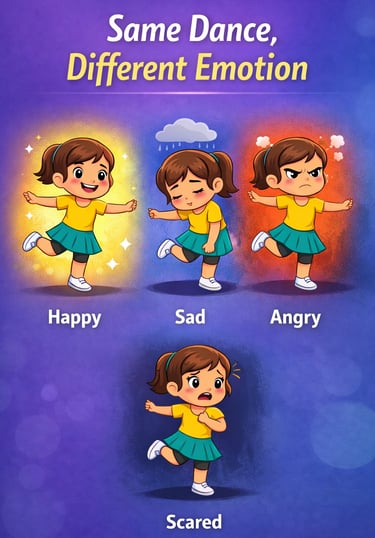
1. Emotions Movement Game (Social-Emotional Learning)
This is one of the easiest ways to build emotional awareness.
How to play:
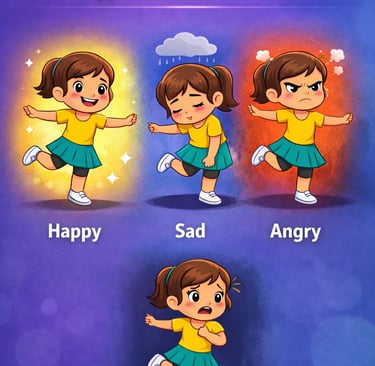
Have your child do the same movement with different emotions:
happy
sad
angry
scared
You can also turn it into an “emotions freeze dance” by changing the emotion each round.
Make it a game:
One person dances → the other guesses the emotion
Why it helps:
Kids learn to recognize emotions in their body, build nonverbal communication skills, and practice empathy by interpreting how others feel.
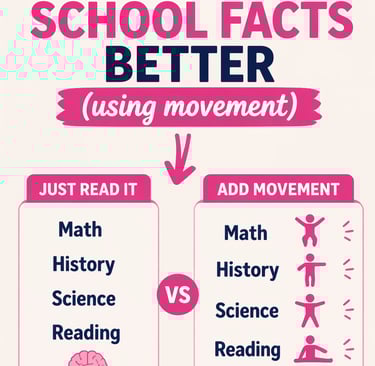
2. Memory + Movement Game
Great for school subjects or memorization.
How to try it:
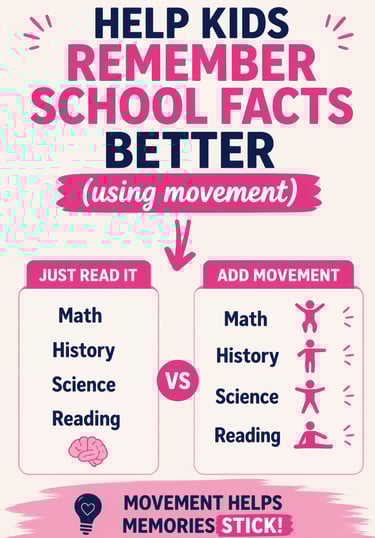
Pick 3–4 school facts (math, vocab, history, etc.)
Give each one a simple movement
Say it while doing the movement
Example:
A vocabulary word = a gesture
A math fact = a clap pattern
Why it helps:
Adding movement gives the brain more “hooks” to remember information. It also helps with focus and makes studying more active.
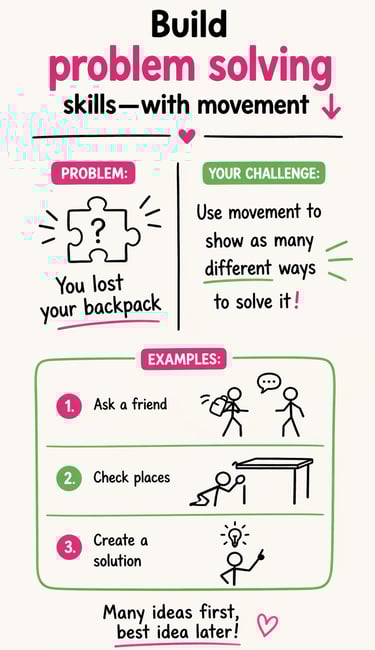
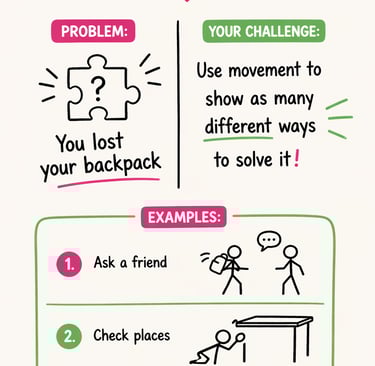
3. Problem Solving Through Movement
This one builds flexible thinking in a really fun way.
How to play:
Give a simple scenario (real or silly)
(Example: “You’re stuck in traffic” or “You lost your backpack”)Set a timer
Have your child show as many different solutions as they can—using movement
They can act it out, move, or physically show their ideas.
Then:
Afterward, go back and pick the best solution together.
Make it a game:
If you have multiple kids, turn it into a friendly competition.
Why it helps:
This builds creativity, adaptability, and real problem solving skills—not just finding one “right” answer.
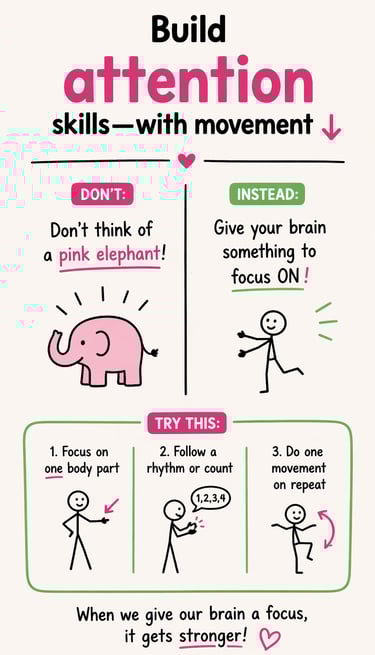
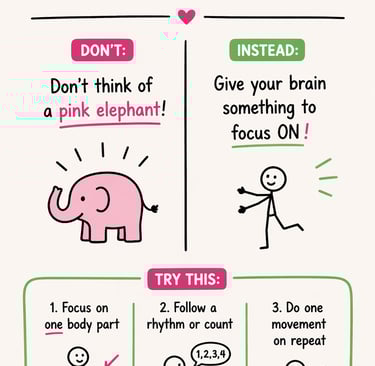
4. Focus Game (The “Pink Elephant” Trick)
Try this:
“Don’t think of a pink elephant…”
…you probably thought of it.
That’s because telling kids what not to focus on doesn’t usually work.
Try this instead:
Put the music on and give them something clear to focus on.
Examples:
focus only on your arms
follow a rhythm or count
repeat one simple movement
Then connect it to one simple focus for the day outside of dance.
Why it helps:
Focus improves when attention is directed—not just when distractions are removed.
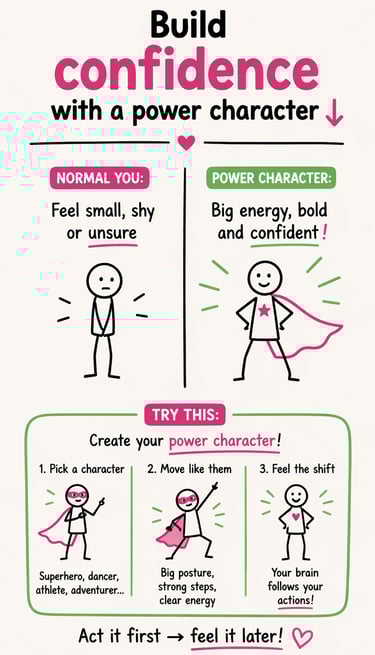
5. Confidence Game: The “Power Character”
Confidence doesn’t always come before action—sometimes it builds because of it.
Try this:
Have your child create a “power character.”
This could be:
a superhero
a bold version of themselves
a strong, confident dancer
Then move like that character:
big posture
strong steps
clear energy
Why it helps:
Acting confident can actually help the feeling follow. It gives kids a safe way to practice confidence.
Final Thoughts
Learning doesn’t always have to happen sitting still.
Sometimes, the best way for kids to learn is to:
move
explore
try things out
These small activities can make a big difference in focus, memory, confidence, and more.
If you try one of these, I’d love to hear how it goes!
Life Skills. Fun. Dance.
Dance is the secret tool—helping kids grow beyond the dance floor.
Approved provider for Wyoming ESA
Arizona ESA vendor registration approved
Contact:
This program is for educational purposes only
+1 516 828 8109
The Secret Dance Technique™
© 2025 The Secret Dance Technique LLC. All rights reserved.